Learning Outcomes
i. Describe the structure, chemical composition, and function of chromosomes.
ii. List structures missing in prokaryotic cells.
iii. Discuss the composition of cell walls in prokaryotic cells.
iv. Differentiate between cell division patterns in prokaryotic and eukaryotic cells.
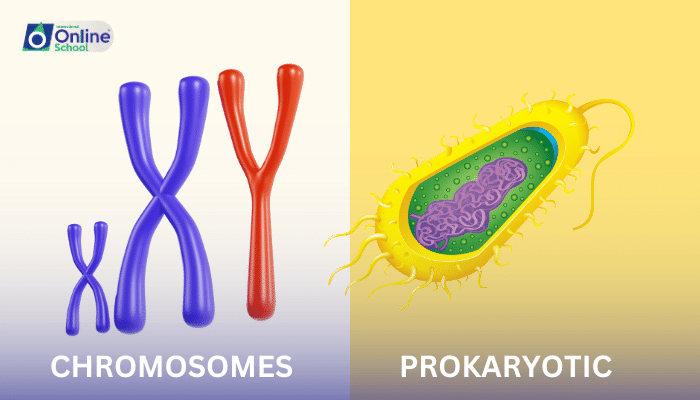
i. Structure, chemical composition, and function of chromosomes: Chromosomes are thread-like structures that contain genetic material. They are found in the nucleus of eukaryotic cells and in the cytoplasm of prokaryotic cells. Chromosomes are made up of DNA and proteins. The DNA contains the genes that code for all of the proteins in the cell. The proteins help to package the DNA and to regulate gene expression.
ii. Structures missing in prokaryotic cells: Prokaryotic cells are simpler in structure than eukaryotic cells. They lack many of the organelles that are found in eukaryotic cells, such as the nucleus, endoplasmic reticulum, Golgi apparatus, and lysosomes. Prokaryotic cells also lack a cytoskeleton.
iii. Composition of cell walls in prokaryotic cells: The cell wall of a prokaryotic cell is made up of peptidoglycan, which is a complex polymer of sugar and amino acids. Peptidoglycan is a strong and flexible material that protects the cell from damage and helps to maintain the cell's shape.
iv. Cell division patterns in prokaryotic and eukaryotic cells: Prokaryotic cells divide by a process called binary fission. Binary fission is a simple process in which the cell replicates its DNA and then divides into two identical daughter cells. Eukaryotic cells divide by a more complex process called mitosis. Mitosis is a process in which the cell's chromosomes are divided evenly between two daughter cells.
Chromosomes are essential for the storage and transmission of genetic information. Prokaryotic cells are simpler in structure than eukaryotic cells and lack many of the organelles that are found in eukaryotic cells. The cell wall of a prokaryotic cell is made up of peptidoglycan, which is a complex polymer of sugar and amino acids. Prokaryotic cells divide by binary fission, while eukaryotic cells divide by mitosis.
